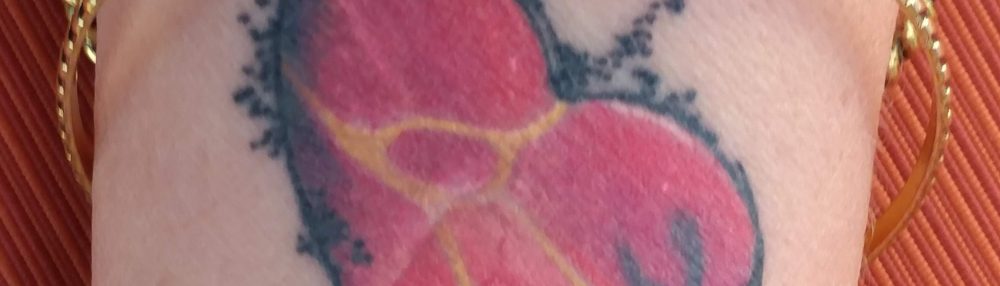
It’s wrong, and I feel like I need to tell someone, anyone, everyone. But I feel like I’m screaming into a vacuum. No one can hear me. No one actually sees me. No one can do anything. And no one really cares.
I’m just supposed to be okay, as if nothing changed. And I have to be careful not to hurt anyone else. But why is it okay for me to be hurt? Who’s being careful for me?
It hurts to pack up 18 years of photographs and memories. I know they’re not gone. The memories will resurface, and the photographs are just packed in boxes, but I can’t function each day looking at photos and rehearsing sweet moments from their childhoods. In order to go to work, clean my house, hope to get any sleep at all, I have to close that door.
I’m grieving a substantial loss. I have lost my daughters. That special relationship and bond between mother and daughter ended. Lives intact, but relationships forever changed. And I don’t have a community with whom to share my grief. There are support groups where other people in similar circumstances gather, and I suppose there might be value in that. But I mean a broader community that sees the loss and agrees with its senselessness.
For instance, if my child were addicted to drugs, I could share that with almost everyone I know, whether we agree politically, religiously, or in any other way or not, and they would agree that being addicted to drugs is a bad thing. They would share my pain, even if they weren’t in my shoes.
Similarly, when a precious life is lost to suicide, God forbid, everyone will offer their condolences, their support, their empathy. People don’t know what to say, but there are offers of help to make, cards and flowers to send, and broad agreement of the senselessness of the situation.
With my situation, people still don’t know what to say. But there are no cards to send. There are very few offers of help or advice or encouraging words. There aren’t many questions to find out how you’re doing, what you think, how you feel. Mostly I hear a lot of, “That must be really hard.” They’re right, but it keeps them at arm’s length… as if this is our problem to deal with, not something they need to address because it doesn’t impact them personally, not yet anyway.
And then there are others who embrace gender transition as the next wave of being fully yourself. I don’t know many people like that personally, so I’m not sure what their exact comments to me would be. Based on my internet searches and reading, I get the feeling that I would hear responses like, “Better a living son than a dead daughter.” Or, “They are still the same person you’ve always known.”
There is truth in both statements. I certainly don’t want to join the grieving community of families who’ve lost children to suicide. And my kids will always be my kids, no matter their outward appearances or self-given names. But I’m still hurting. I still experience loss. It still sucks for me. And because people don’t agree on what this is, why it happens, or what one should do in response, that broad community with whom I would share my story seems scary.
Will they judge me for my parenting choices, perhaps thinking it’s my fault? Will they judge my kids as sinful and deserving of punishment? Will they wonder why I didn’t agree to puberty blocking hormone treatment at age 13? Will they delegitimize my feelings because I have outdated views? Will they watch quietly from the sidelines, glad it’s not their challenge, thinking that I’m one of “those” people? Will they feel sorry for me?
I kind of understand why people want to support early transition for their kids. It would be much easier to let go of the hopes and dreams of two, or three, or four years of photos and memories than 18. It would be easier to get a new set of friends, or start your child in school for the first time, so that people would never know them as the opposite gender. Less to change. You could pretend like it’s who they’ve always been. It still seems false, but easier.
I’m angry. I’m hurting. I will never get over this. But I will be told I have no choice. What do I know anyway? It’s just my feelings, my hopes, my dreams, my expectations. You have to adjust them all the time. Just learn to let it go.
It seems as if this is an unquestionable reality for which psychologists think they already know the best answer. And the church just says it’s wrong and suggests compassion, or alternately jumps in and agrees with the societal narrative, but doesn’t offer hope or a new way of thinking.
Psychologists, contemplate a solution that isn’t conversion therapy but also doesn’t require lifelong medical interventions on a healthy body. Incorporate ideas of faith into treatment and assessment. Be holistic.
Church, this issue is real. It’s not just adults who make “sinful” decisions for whom you need to have compassion and set them to rights. It’s children, it’s families – good, faithful families. It’s not going away, unless you offer no hope or holistic approach that combines theology and science. Then maybe it will go away because all the impacted people will just go away, hopeless and disillusioned.
I feel like the one unbeliever who questioned those new, spectacular, yet invisible,  clothes they made for the emperor. No one wanted to speak up. They didn’t want to make waves or be laughed at. Well, I don’t care anymore. I’m vulnerable. I’m real. And I’m not going to remain silent.


You must be logged in to post a comment.