You know those relationship status updates on Facebook? So and so is engaged. So and so is in a relationship. Then there’s the one that says, it’s complicated.

That’s the way I feel about the issue of gender dysphoria in my twins and the life of our family. On the one hand, it makes no sense to me. It makes me sad and confused and angry by turn, because of the loss I feel: the loss of my daughters and the loss of the vision for my life’s story.
On the other hand, it does nothing to change the fact that I love my kids unconditionally. I understand that life is challenging for them, and I believe there is something unique and real to their experiences of life that have pointed them in this direction. As a mom, I really do want my kids to be happy and feel confident in themselves, whether they fit social norms and expectations or not.
There aren’t just two hands, however. On the third hand, I’m highly dissatisfied with the lack of support and options provided by the institution of the church. Perhaps in recent years there has been some progress made towards understanding and learning, but mostly it’s either to express disapproval while attempting to provide compassion, or to accept carte blanche everyone’s individual decisions about gender without providing space for critical thinking, and pursuing supportive, holistic options that simultaneously respect tradition, physicality, neurology, and faith, especially for families whose minor children are experiencing this crisis.
On yet another hand, I’m beyond dissatisfied with the approach of the psychological community and the media’s culture of championing and promoting gender transition as an inevitable identification and equating it to a civil right. It seems as if there is no questioning why or any attempt to understand the nuances and multifaceted factors within the experience.
The certainty with which the conservative, Christian church approaches gender (from a traditional, patriarchal perspective) alongside the even stronger certainty with which most of the transgender support organizations approach gender identity (as an inherent personal trait, separate from one’s biological sex) combine to make exploring learning and understanding and creating a space for dialogue about a holistic approach nearly impossible.
The fact that gender identity has become such a hot-button topic has made medical professionals afraid to implement any measures that require time and thoughtful process to happen before allowing teenagers and young adults to make irreversible, physical changes.
What most people do not realize is that all that is required for an independent young adult (18 years or older) to receive hormone replacement therapy or have gender confirmation surgery, is to sign a form indicating they understand the risks. If they can pay the fee required and sign the release form, all of these medical interventions are at their fingertips.
WPATH (World Professional Association for Transgender Health) recommends counseling and living as the desired gender for up to two years before medical interventions, but the medical community does not require anything, because they don’t want to put any obstacles in the way of someone who is struggling with their identity. I can respect that, from the perspective that dealing with identifying in a way that goes against culture can create social stigma that contributes to depression and bullying, but when the stakes are so high, and regret a definite possibility, I think some constraints still make sense.
It is ironic that a single, female friend of ours who is in her early thirties cannot readily obtain tubal ligation because the medical community believes she’s too young to make that decision, and she might change her mind and want to have kids later in life. However, my 19-year-old could have a double mastectomy by signing a release form and paying a fee, without ever having met the doctor in person in advance of the procedure.
I’ve come to a point where I need to choose which hand I’m going to hold. I need to find a settled place from which I can move forward and live at peace with myself and with my kids. It is hard to hold love in your hands while also hanging on to hurt and conflict.
I would be thrilled to see dialogue where people of differing perspectives come together and discuss what is objectively true. They could engage with how diversity, acceptance, and relationship intersect as they impact best practices and choices regarding gender identity and expression. Ultimately, though, I can’t live in that place of rehashing my unhappiness with our existing systems and institutions. I am not in a position to effect change of any magnitude in those places. I will say my piece. Then I will let it rest.
That leaves me with my own two hands – my hand as the person I’ve been and always hoped to be, and my hand as mom to my three kids. I must choose which one to release, and which one to grasp more tightly.
I know which one I’ve chosen. There is no question that my own pain is a small cost to pay, though my loss is not insubstantial. It’s real, and I am reminded of it in a multitude of small moments throughout most days. I worry that if I seem accepting of my kids’ choices by living at peace with them and expressing joy and pride in them, people won’t realize that the cost is still real, and that the pain mattered. They’ll think, “See, you just needed to take time to realize that everything is fine, and their choices make sense. You just needed to realign your thinking.” I want them to know, I’m still hurt and frustrated, but I know where my priorities lie.
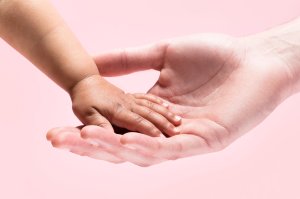
Relationships matter more. If that’s what I believe is true, then the hand to which I will reach out is the one that seeks relationship with my children, no matter what. Always.


You must be logged in to post a comment.