LATIN – Perdonare
Per = through / thoroughly / completely
Donare = to give / donate
OLD ENGLISH – forgiefan
DUTCH – vergeven
GERMAN – vergeben
ENGLISH – forgive
Forgive = Give completely
The English words forgive and pardon both originate from the Latin “perdonare.”
In Old English, forgive meant ‘to give up’ or ‘allow’, and also ‘to give in marriage.’
In modern English, it has also taken on the meanings ‘to pardon for an offense’
and ‘to abandon a claim on’ or ‘to release from debt.’

***********************************************
Plants in a garden require care to grow and be healthy. They cannot flower or produce fruit without sufficient sunshine, rain, and nutrients in the soil. The garden needs to be weeded regularly and vigilance is essential to prevent insects and animals from damaging the vegetation and devouring the fruit.
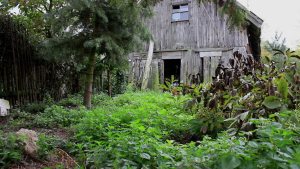 Gardens also show resilience and can recover from neglect when attention is again returned. Pests can be eliminated, weeds pulled up, and fertilizer incorporated into the dirt. Plants may take time to revive from the intervention, but with patience and attentiveness, even those that appear almost dead can fully rebound and grow lush and healthy once again. The garden benefits, the gardener benefits, and anyone who sees the flowering plants or eats their produce benefits.
Our inner garden of the soul is much the same. It requires care to grow and be healthy. It needs the necessary ingredients to flourish. Weeds and pests must be eradicated. Patience and attentiveness are indispensable. The only way others can benefit from this garden is when it is thriving and blooming and being enjoyed and nourished by the gardener herself.
In my soul’s garden, there is work to be done to return it to healthfulness and beauty. Harmful pests must be removed. Watchfulness must be implemented so I am aware of what is impeding maturation. I believe forgiveness is one of the tools for cultivating the inner garden. Initially it seems as if its purpose is to aid the one being forgiven, but at its heart forgiveness cannot aid anyone else without first providing health and sustenance to the one doing the forgiving. If anyone else is to enjoy the growth, I must first nurture and savor it for my own well-being.
When writing about family last week, I mentioned that “we couldn’t see each other clearly because each of us was looking through a lens clouded by our own pain, vulnerability, and unmet needs.” Lewis B. Smedes in his book, The Art of Forgiving, confirms this phenomenon when he writes:
“I have heard that 80 percent of what we see lies behind our eyes. If this is so, 80 percent of what we see when we look at a person who recently wronged and deeply wounded us must lie behind our eyes in the memory of our pain.”
 He goes on to suggest that as we start on the miracle of forgiving, we begin to see through a clearer lens. We are able to see the humanity of the person who hurt us. We start to glimpse the real person who shares our faulty flesh and blood, bruised just like us.
Smede first builds a framework about what forgiving is and what it is not. For instance, forgiving means not seeking vengeance, but it does not mean abandoning justice. Then he moves on to elaborate when forgiveness is the correct tool for healing, noting that it takes discernment to know when one is enduring unintentional hurt, and when one has been purposefully wronged. According to Smede, forgiveness is the tool for healing deliberate offense, but is not meant for every pain that people cause us. A friend may be thoughtless or annoying and that inflicts pain, but it doesn’t require your forgiveness. It might require your long-suffering and acceptance of her faults, but not forgiveness. However, if that friend betrays you and breaks your trust by divulging confidences that she knows will hurt you, forgiveness would be required to bring healing to that friendship.
From that perspective, I don’t believe forgiving others is the right mechanism for bringing healing in my heart and in my relationships. There has been a significant amount of hurt and woundedness, but I do not believe it was willful wrongdoing.
In light of the definitions for forgiveness as “giving completely” and “abandoning a claim on,” I think much of what Smede presents still resonates with me, even though it seems that my optimal instrument for healing is actually acceptance. He describes forgiving (and I believe this applies to acceptance as well) as the art of healing inner wounds inflicted by other people’s wrongs. In my case, I don’t necessarily see my children’s actions as wrongs, but rather as choices which cause me pain.
Smede offers the idea that forgiveness is the vehicle for getting ourselves free from our trap of persistent and unfair pain. It’s something that happens inside a heart that hurts, and it happens only when we don’t want to hurt anymore. It is a remedy for pain, but not anybody else’s pain, just our own. He also suggests that when we cannot forgive and forget, that we actually forgive and remember, creating a new way to remember that changes the memory of past pain into a hope for our future. All of these ways of viewing forgiveness also seem applicable for seeing acceptance when the healing being sought is from unintended wounds rather than deliberate injury.
 In my experience, when I hold on to my expectations, I am trapped in a cycle of pain and loss. However, when I abandon the claim on my children’s choices and decisions, I begin to feel freedom. As I decide that I cannot live in constant turmoil, I allow my heart to become untethered, beginning to heal my own pain. I will not forget, but I will choose to remember with love and generate hope for a future full of promise. When I accept what is not mine to choose, and relinquish my grasp on the related hurts, I allow myself room to recover and rebound.
I am letting go of the old. I am letting go of the familiar. Seeing myself as wounded and broken has become comfortable, but that’s not where I want to stay. It’s hard, though, to let go. Who will I be once I stop speaking of the dichotomy of pain and love living side-by-side? Will good become great? How long will it take?
Cheryl Richardson, life coach and bestselling author of Waking Up in Winter, says it well:
“Gardening, like life, requires courage. We must be brave enough to cut back the old and sit with bare branches, awaiting new growth. And we must trust that it will come.”
 My branches are almost bare. I have a few more to prune back before the job is complete. I’m not so brave, but I can tell you that it was the only choice that made sense. Stunted growth is not really growth at all. I am the same plant as always, but I trust that the new growth will be fuller, more vibrant, and ready to flower in brilliant color as I wait for sunshine and rain to nourish me back to health and life. Only then will I be able to provide comfort and shade to anyone beyond myself.


You must be logged in to post a comment.