
 Live and let live is a proverb that embodies tolerance, even without agreement.
We recently had a wonderful dinner and heartfelt conversation with friends who described their church as “live and let live” in ideology. They attend a United Methodist Church that has embraced being a reconciling congregation. It is a part of the UMC’s Reconciling Ministries Network whose guiding principles in part state:
“Reconciling Ministries Network is committed to the justice imperative of the Gospel and grounding its ministries in the Wesleyan practice of personal and social holiness. RMN is committed to utilizing inclusive language and respectfully recognizing the diverse approaches to scripture, tradition, reason, and experience of the congregations and communities with whom it relates.”
The main thrust of their reconciliation is to bring people from the LGBTQ community into full inclusion in the body of the church. Their mission also includes celebrating human sexuality as a good gift from God that should be experienced in healthy and loving expressions.
Honestly, I find the idea of allowing people freedom to be accountable to God individually and coming together in community to live out shared faith a refreshing one.
There is obviously a great deal of disagreement over the issues of gender and sexuality both within and outside of the church. Personally, I’m not sure that all expressions of transgenderism are healthy, nor do I think sexual orientation or gender identity are immutable genetic traits. I think we should continue to pursue respectful dialogue about both issues and work towards the best, holistic responses to those real experiences, impulses, and choices. But I also think that the most important part of faith is in whom we have placed our trust, not in whether we agree on the details of how we live it out through our moral choices.
People who love God and follow Jesus hold diverse opinions and interpretations of scripture when it comes to sexuality and gender, as on many other controversial topics. One is perfectly free to determine that a particular interpretation or viewpoint is the correct one, but to insist that everyone else come to the same conclusion seems presumptuous and foolish. Certainly, robust discussion should be engaged on all topics of import, but holding one’s opinion higher than another’s to the detriment of relationship seems unloving.
There are some consequences to being a live and let live congregation that I think we all should consider, because as we embrace adults who identify as gay, lesbian, bi-sexual, transgender, and queer, this will impact the culture in which we raise our children. Being accepting and tolerant are fabulous traits to teach and model, so those are good results. Other repercussions should be anticipated so they don’t take us by surprise. One issue that will arise includes helping families figure out how to handle gender dysphoria happening in young children with greater frequency.
“Outbreak: On Transgender Teens and Psychic Epidemics” cites the increasing number of children and teens identifying as transgender: “In recent years, there has been a sharp jump in the number of children and young people coming to identify as transgender. London’s Tavistock and Portman clinic has seen referrals for trans patients under the age of 18 increase dramatically. Fourfold and fivefold increases of trans-identifying kids and teens are being reported in gender clinics in the United States and other countries.”
Additionally, issues of same sex attraction and gender identity will come into play with our preteens and teens when hosting sleepovers. Our church culture – and really society as a whole – has been mostly heterosexual and gender binary for the preponderance of history. If these things are changing, whether one thinks those changes are good or not, we all must consider how those changes impact all levels of our culture down to our youngest members.
We love our friends who attend the United Methodist Church and were enriched by our exchange where we engaged the philosophical, focused on the importance of grace and freedom, and learned about the Wesleyan Quadrilateral: the foundation for the Methodist church faith practice, in the tradition of its founder, John Wesley. The four elements begin with scripture and include tradition, reason, and experience. That seems a healthy approach, and is actually how most people do faith, whether they realize it or not. They are impacted not just by scripture, but also by tradition, experience, and sometimes reason.
My caveats to the whole live and let live philosophy, from an emotional standpoint that I can’t get past right now due to the recent revelation of our youngest’s plans for surgical transition:
- Our current society is very driven by identity and individual expression. I relate strongly to that and feel it is so important to grow in the knowledge of who you are and to be accepted even when you’re different. However, people do not exist as islands. They are intended to be in relationship. When one’s identity and individual expression impact those in relationship with them, I believe additional consideration should be made before promoting the assertion of that identity and individuality as the celebrated intervention. For me, this means that the pain I feel as a mother who raised twin daughters, but now appear to have twin sons, should be a consideration for my twins and for anyone advising them or providing services to them.
- I also question how far the live and let live mentality should go. As a parent, should I have that attitude towards my juvenile children? What about my teenagers? Certainly as the parent of adult children, I really must accept a live and let live attitude, but even then, how far do I take it? When things are concerning to me, or when things are hurtful to me, do I just live and let live?
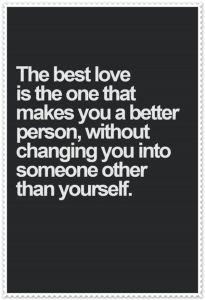
To all the many and diverse friends who are walking with me through life, thank you. You help me rebound. You challenge my thinking. You encourage me. You make me a better person. 😊


You must be logged in to post a comment.