 In substance abuse programs, celebrating sobriety birthdays or benchmarks is considered important to serve as a reminder of the progress and growth one experiences through the recovery process.
I have not had a substance abuse problem, nor have I been in a substance abuse recovery program. However, coming out from under guilt-ridden faulty source beliefs is a recovery process all its own.
Last week, at the end of one day, I realized I hadn’t heard a guilty, attacking voice in my head all day. Two more days passed. At the end of the third day, I was surprised to discover that the voice had been quiet for three whole days. It hadn’t just been suppressed because I was telling it to go away. It was just silent.
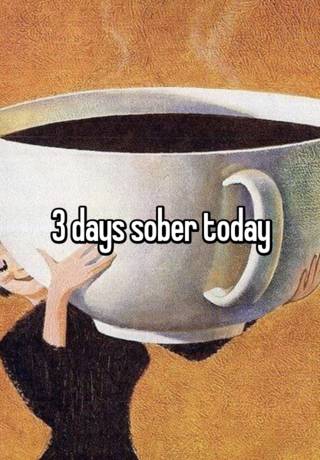
It was at that moment I felt like celebrating my “three days sober.” It seems like an apt comparison. I am actively removing something in my life that I had felt was there to help me but was really destructive and full of negative power. I am seeking outside support to gain tools and resources for replacing the voice with mindfulness and critical thinking. I am developing and renewing friendships that reinforce the truth of challenge in all of our lives while at the same time providing space for encouragement and acceptance.
One cannot embark on a journey of recovery without first becoming cognizant of the problem. Even at that point, the process cannot really take hold or produce results without hope, action, and support.
In the midst of the multiple challenges I have faced in the past five years, and particularly the last 12 months, I have been earnestly seeking a way forward. I began by addressing the impetus for my recent struggles and doubts, the transgender identification of both of my twin 19-year-olds. My blog has been a place of learning and revelation for me. It has provided an outlet for my process and given me a supportive audience. What I uncovered, though, was more than information about gender dysphoria and various perspectives on its origin and treatment. I unearthed the deeper reality of questions about my life, my history, and my source beliefs.
My attempts to dig deeply into my foundations and to forge a new path have included: taking theology classes at a local church; reading books on belief, gender, philosophy, and forgiveness; seeking out counsel from various people of faith, coworkers, and friends with differing beliefs; deeply researching gender topics from multiple perspectives; and participating in couple’s counseling with my husband. More recently, after attending a session on source beliefs at a professional conference, I have begun individual counseling with a therapist and obtained a personal neuropsychological evaluation.
The evaluation process was interesting, especially because this neuropsychologist has completed assessments for both of my twins. It was new to be on this side of the undertaking. Through examination of the rating scales completed by both me and my husband, cognitive and facial affect evaluations, and a personal interview, the doctor concluded that my results do not indicate a disorder of any type, though there are a couple of categories in the rating scales that are elevated.
Affect intensity and shift were the two areas showing the highest scores. Affect intensity is a measure of the strength or weakness with which one experiences emotions, and shift refers to one’s ability to move between activities, behaviors, and attention focus.
The doctor indicated that I have a high affect intensity with stronger emotional reactions to both positive and negative emotions. He noted that people with high affect intensity don’t ever really experience a change in that characteristic. It’s not something that goes away.
He also explained that I have a difficult time shifting my attention and behavior once I have become narrowed in on a topic or conversation, which tends to make me appear rigid and inflexible to others at times.
The combination of these two characteristics increases their negative impact on my relational abilities because shifting is so challenging for me and the resulting emotional level is so intense that my interactions are more difficult to negotiate. Additionally, not being aware of the fundamental nature of these elements, and rather seeing them as character flaws or weaknesses to overcome, has contributed to the furthering of faulty source beliefs.
My commencing with individual counseling was affirmed by the doctor as a great step towards being able to adapt my behavior in such a way as to honor these elevated traits without them causing harm to the people I care about.
As I’ve been traversing this year of crises, I’ve been collecting some of my thoughts and questions that are providing insight for my passage.
- How do you learn to accept yourself as you are, but still own your own crap?
- Vulnerability creates potential.
- There’s a lot of hope around the corner. I just don’t know how far away the corner is.
- Correcting the errors in your source beliefs is not just about changing your thinking. It’s about healing the wounds that caused the faulty beliefs to begin with. Once healed, new reliable beliefs can be formed and implemented to create healthy patterns of relationship. However, trying to build healthy beliefs while the wound still exists is like flesh healing while an internal wound and infection still rage on. One might look healed, but the pain and sickness inside still impact everything, and will eventually cause destruction.
- I’m not okay. I never will be okay. And that’s okay.
I feel permission to be me. I can see my extreme emotions as just a part of what makes me unique. I can see my focus and determination as the positive traits they are. And I can learn ways to exercise these characteristics without damaging relationships.
The voice in my head has told me for years that it would be better if I were just someone else. That voice is wrong, and now I know it. My doctor told me so. 🙂


You must be logged in to post a comment.